Our Team
Meet the researchers and developers behind collAIder
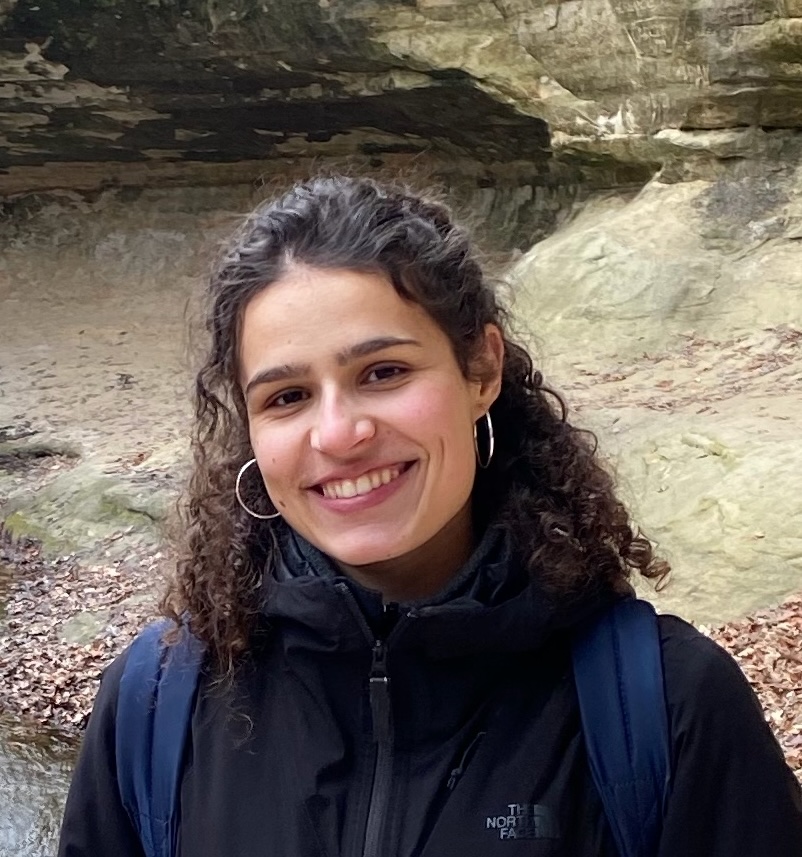
Elena González Prieto
Graduate Student, NU
Elena is the lead developer for collAIder. Her research focuses on the dynamical evolution of dense star clusters, with an emphasis on massive black hole formation.
Jamie Lombardi
Professor, Allegheny College
Jamie uses smoothed particle hydrodynamics simulations and machine learning to model stellar collisions, especially in dense environments like galactic nuclei and star clusters. His work focuses on understanding collision outcomes and connecting them to astrophysical consequences such as stripped-star formation and the spin-orbit properties of binary black holes.

Fred Rasio
Joseph Cummings Professor, NU
Fred Rasio’s research spans a wide range of topics in theoretical astrophysics, including: exoplanets and planet formation; the dynamics of dense stellar systems; hydrodynamic stellar interactions; and relativistic astrophysics. His most recent work has focused on the dynamics of extrasolar planetary systems, gravitational wave sources for laser-interferometer detectors, and the formation of massive black holes through stellar dynamical processes.
Sanaea C. Rose
Lindheimer Postdoctoral Fellow, CIERA
Sanaea studies interactions between stars and stellar remnants in dense star clusters. In particular, I explore how these interactions lead to unique populations of stars, binaries, and black holes and drive extreme events like collisions, mergers, and tidal disruptions.
Charles F.A. Gibson
Graduate Student, NU
Charlie's research lies at the intersection of stellar evolution and the hydrodynamical evolution of stellar collision products. His work bridges the smoothed particle hydrodynamics code StarSmasher, used to model stellar collisions, and the stellar evolution code MESA, enabling a better understanding of how stellar collisions and interactions shape both the short-term and long-term structure and evolution of stars.
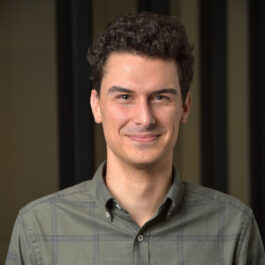
Chris O'Connor
Postdoctoral Fellow, CIERA
Chris O'Connor is a CIERA Postdoctoral Fellow whose research interests span a wide range of problems in astrophysical orbital and fluid dynamics, including tidal interactions, mergers, and collisions in dense star clusters and close stellar binaries. He also studies closely related problems in the context of extrasolar planetary systems.
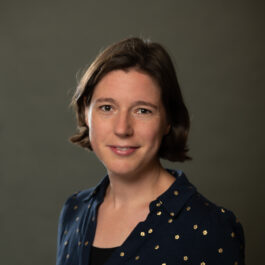
Tjitske Starkenburg
Research Assistant Professor, NU
Tjitske’s research covers analyzing the full galaxy population, including anomalous galaxies, in large-scale and zoom cosmological models and observational samples, and the development of theoretical models and techniques to build synthetic observations. She is interested in statistical and machine learning approaches to connect observational data to theoretical constraints, and in studying how these tools can lead to gains in physical understanding.
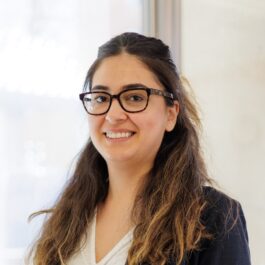
Fulya Kıroğlu
Postdoctoral Fellow, CIERA
Fulya's research focuses on understanding the progenitors and environments of high-energy transients, including gravitational waves, gamma-ray bursts, and X-ray sources. She performs N-body simulations of black hole dynamics and stellar interactions in dense stellar systems combined with hydrodynamic modeling to investigate their outcomes, observable signatures, and the underlying accretion physics.
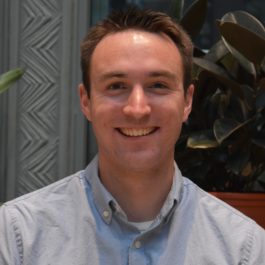
Kyle Kremer
Assistant Professor, UC San Diego
Kyle's areas of expertise include N-body simulations of dense star clusters, detection of compact object binaries via gravitational waves (e.g., LIGO & LISA), and high-energy transient phenomena such as tidal disruption events and fast radio bursts. He has also worked on binary star evolution, hydrodynamics of stellar mergers, radio pulsars, intermediate-mass black holes, white dwarf binaries, low-mass X-ray binaries, and observational searches for black holes in Milky Way globular clusters.
Tristan C. Parmerlee
Undergraduate Student, Loyola
Tristan is interested in using computational methods to investigate evolutions of stars in clusters through interactions with other stars. Particularly, Tristan is interested in the use of machine learning to accelerate research into open astrophysical questions.
Miguel Orti Vila
Undergraduate Student, Allegheny College
Miguel's research focuses on uncertainty quantification for stellar collision machine-learning models. Having recently implemented a bayesian layer to determine uncertainties in collAIder's outcome and mass predictions, he is now working closely with Elena and Dr.Lombardi in running more simulations to streamline collAIder's output through active learning.